Wednesday, October 26, 2016

Hoopie Fest-The Day After

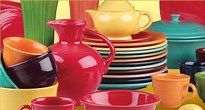
Over the last several years, my sister Sally, her husband Rick, myself and my wife Becky have been going to West Virginia and the Homer Laughlin Pottery the day after Hoopie Fest. The reason? to buy Fiestaware.  Fiestaware is made at Homer Laughlin and they have an outlet store there where you can get hard to find pieces at a discounted price. Even better, they have a seconds store also with even bigger discounts. Many of the seconds are seconds, maybe even thirds. But many of then are as good as their first quality products. You just have to sort through them to find the diamonds. With that said, I want to post an article I wrote about Fiestaware several years ago for another publication. I hope you enjoy it.


A HISTORY OF FIESTAWARE


This iconic American dinnerware is as popular today as it was when it was first created. Not only is newly made Fiestaware very popular and collectible, but so are the old pieces. It never goes out of style. The fact that it’s readily available, both the old and the new, adds to its popularity.


Fiestaware was first produced in 1936 by the Homer Laughlin China Company in Newell, WV (Fiesta (dinnerware) 1). Fiestaware was designed by the company’s art director Frederick Rhead. Frederick Rhead was a well known English potter. Fiestaware’s design was influenced by the art deco movement which was very popular at that time (Fiestaware’s Hot, So Don’t Get Burned 1). The simplicity of the design, with its concentric circles near the edge and featuring bright colors and affordable prices, made it an instant success (Fiestaware History 1).


Fiestaware was introduced in 1936 at the Pittsburgh Pottery and Glass Show. Fiestaware included 55 pieces in five colors. The original colors were ivory, yellow, light green, red, and cobalt blue. A sixth color, turquoise was added in 1937. These six colors are often referred to as the original six colors (Fiestaware’s Hot, So Don’t Get Burned 1-2).  While Fiestaware was not the first solid color dinnerware in the United States, it was the first mass produced and marketed solid color dinnerware (Fiesta (dinnerware) 2). Naturally, the early colors are considered more valuable by collectors.


At the time of its introduction, most dinnerware was sold as predetermined sets all decorated with the same design which was usually decaled onto the dinnerware. Fiestaware changed all this with its bright colors, art deco inspired design, and open stock sales approach. While Homer Laughlin did offer basic table service sets for four, six and eight persons, the open stock concept was its main marketing scheme (Fiesta (dinnerware) 2).


In 1943, red had to be eliminated as a color. The red color contained uranium in the glaze which gave it the vibrant red color. Unfortunately, the government required all the uranium it could get its hands on for the war effort so the red color was discontinued (Fiestaware’s Hot, So Don’t Get Burned 2).


A series of promotions, with promotional pieces, were offered by Homer Laughlin between 1939 and 1943 to promote sales. The pieces that were part of these promotions are scarce. Only the yellow disk juice pitcher is relatively common. Other promotional pieces include the French casserole, figure 8 set, and a set which included the promotional casserole and a pie plate (Fiestaware History 1).


During World War II, the Fiestaware line began to be reduced. Less demand and the need to focus on production resulted in the line of items available to be reduced by a third. The more unusual pieces serving pieces were discontinued. The sales of the more typical place setting pieces remained strong and did not peak until 1948 (Fiesta (dinnerware) 2).


By 1951 four more colors were added. The newly added colors were grey, rose, chartreuse, and forest green. In 1951, cobalt, light green, and ivory were eliminated. Only yellow and turquoise remained of the original six colors (Fiestaware History 1-2).


These colors were produced until 1959 when the last color change occurred. The fifties color were dropped and red came back. Also, a new medium green was added. Yellow and turquoise remained. Only yellow remained through the entire life of Fiestaware. Turquoise, which began production in 1937, also lasted the entire run (Fiesta (dinnerware) 3).


The first major change in Fiestaware occurred in 1969, when Homer Laughlin tried to modernize the color choices to a more earth tone palette and changed the shape slightly. This new design was called Fiesta Ironstone. By 1969, tastes had changed and Fiestaware was changed to try to modernize it (Fiesta (dinnerware) 4).


The red was renamed mango red. Yellow, turquoise, and medium green were replaced by turf green and antique gold which matched the then popular harvest gold color (Fiesta (dinnerware) 4). The changes in Fiestaware did not meet with success and after four years, in 1973, Homer Laughlin discontinued Fiestaware entirely. 


During the 70’s a new appreciation for the art deco style and Fiestaware flourished. Collectors began buying Fiestaware at auctions, second hand stores, and a newly popular forum called the “garage sale” (Fiesta (dinnerware) 5). Due to its new popularity, the price of Fiestaware skyrocketed.


In 1986, in celebration of Homer Laughlin’s 100th anniversary, and the 50th anniversary of Fiestaware, and due to the popularity of Fiestaware on the secondary market, the company began producing Fiestaware again (Fiesta (dinnerware 5; Fiestaware’s Hot, So Don’t Get Burned 2). The new Fiestaware is stronger and heavier than its predecessor and has a slightly different shape. Other new shapes were designed as part of the reintroduction by Jonathon Parry who became the art director for Homer Laughlin in 1984 (Fiestaware’s Hot, So Don’t Get Burned 2; Fiesta (dinnerware) 1).


Like its forerunner, in comes in a variety of bright colors. Fiestaware is sold as a line of open stock dinnerware which allows buyers to mix and match pieces and colors. The dinnerware continues to be brightly colored and affordable which is still much of its appeal. The new Fiestaware was initially offered in five colors, rose, black, cobalt, white and apricot. Homer Laughlin has produced the new Fiestaware in 26 different colors none of which match any of the thirteen colors of vintage Fiestaware. Fiestaware has also introduced special edition colors such as sapphire which was sold exclusively at Bloomingdale’s (Fiesta (dinnerware) 1 and 5-6).


As often happens with many dinnerware shapes and styles, the manufacturer will add different decals to the various shapes and give them new names. Fiestaware was no different. The Fiestaware shapes were often decorated with decals and marketed under other names. One such style was “Fiesta Casuals” which consisted of two patterns, one being yellow with brown florals accented with solid color Fiestaware turquoise. In the 1960’s Homer Laughlin marketed “Amberstone” which was a similar concept to “Fiesta Casuals” (Fiesta (dinnerware) 4-5).


Because of its popularity, many manufacturers have issued imitations that are nearly identical to the original. Not all Fiestaware has a label, so to tell the originals from the knock offs, examine the concentric circles. On real Fiestaware, the rings get closer together. On the imitations, they are evenly spaced (Fiestaware’s Hot, So Don’t Get Burned 2). 


Today the popularity of Fiestaware is as strong as ever. Instead of fine china, engaged couples are now registering for Fiestaware. Some like to have pieces all the same color. Some like the eclectic look and incorporate many colors in their table settings. There is no right or wrong way. Fiestaware also comes in specialty pieces and designs for holidays, such as a pumpkin face, or for summers with watermelon seeds incorporated into the design.


To summarize, Fiestaware has had a rich history with the usual ups and downs. The one thing that is clear, it also has a very bright future.


Works Cited


Fiestaware History-America’s Favorite Dinnerware. “Fiestaware Collector.”


Fiestaware’s Hot, So Don’t Get Burned. “OldAndSold Antiques Auction & Market”.


Wallace, Gretta. History of Fiestaware.  “Articlesbase”.

            <http://www.articlesbase.com/news-and-society-articles/history-of-fiestaware-

            1487428.html>


Fiesta (dinnerware).  “Wikipedia, the free encyclopedia“.


Friday, October 21, 2016

My Grandma's Apple Cobbler-Emma Loucreta (Wood) Faulkner by: Wanda Faulkner

Grandma's apple cobbler tasted like no other, probably because I felt so much love for her, and also the love from her to me. I suspect that it wasn't the cobbler, although it was good, but the fact that I was able to share these times with her, they have made wonderful memories that I relive every time I make this cobbler.

Grandma never used measuring cups or spoons, it was all by just knowing what she needed. I know I thought this was magical!

Grandma would make the pie dough from scratch, she always used Crisco (it is lower in fat than butter), she would use flour, a little salt, enough Crisco to have the dough make little peas, then add enough water to bring it together, she would roll it out to fit a deep dish pan. Before adding the apple mixture she would take a fork and prick it all over. (I use a basic pie recipe, or have been known to use the dough you can buy at any grocery).

The apples would be enough to fill whatever dish she was using, usually whatever we had on hand, (I like Granny Smith, but I am sure that isn't what she used). She sliced them and then added about 1 cup sugar, about 2 tablespoons flour, around 1 tablespoon cinnamon (enough to have all the apples a light brown), and a little nutmeg. Then she would mix it all together and put into the pie pan. I remember being surprised by the butter she would dot on the apples, and then another layer of pie dough on top. She would flute the edges, cut designs on the top and then sprinkle sugar over it. I bake it now at 400 for about 50 minutes.

The only remaining ingredient is love. Add lots of love and enjoy it.

Thursday, October 20, 2016

Emma Loucreta (Wood) Faulkner- A Remarkable Lady

The following story was related in Joan Annette (Coley) Faria's book, "Coley Family History Book: Coley-Ramey-Agner." I discussed this book in the first post I did on this blog. It is a remarkable book. The story was told by Wanda Lee (Faulkner) Lindbloom, her Granddaughter. Both Joan and Wanda are contributors to this blog and also help make up the "Coley Family History Detectives" of which I am proud to be part. They are both special ladies in their own right and have been invaluable in discovering part of my past. It is with their permission that I will tell the story. I hope you enjoy the story as much as I did.


 Emma Loucreta Wood was born on February 22, 1889 in Hilton, VA. In 1900, she  lived in White River, Madison, Arkansas. By 1910 she lived in Richland, Madison, Arkansas. Emma was a warm, vibrant and fun loving lady who never met a stranger, all were treated as friends. She smelled of snuff and Avon's "To a Wild Rose." She would always have you sit close to her, but would always sit with her arms crossed in front of her. She made the best cobbler. In fact, Wanda still makes her apple cobbler every year for the Holidays. Wanda would sit in the kitchen with her and watch, and she would talk people and days gone by. When Wanda would visit her, she would love going into the cellar and looking at the rows and rows of colorful jars that her garden had produced, the reds, greens, purples and browns. . She has fond  She had a unique way memories of helping her snap the green beans on hot summer  nights when everyone would sit in a circle and visit while they worked. Emma died on November 28, 1966 in Lincoln, Washington, Arkansas and is buried in Lincoln, Arkansas. To this day she is missed and very fondly remembered.

Her Grandson Ellis Faulkner wrote, "Mommie Faulkner, she didn't like to be called Grandma! I loved this woman dearly! She had a unique way of making each of her grandchildren feel special. She was great cook. She made great cobblers. As fine a person as I've ever known!!!"

What more is there to say.

Emma and her son Ellis


Tuesday, October 18, 2016

GENEALOGY COMPUTER SOFTWARE

What I believe to be an integral part of anyone's genealogy tool box, is a computer genealogy software program to build, save and maintain your hard work. Ever since I got my first computer, in 1995 running Windows 95, I've had a genealogy program. I have always used Family Tree maker. At that time, Family Tree Maker (FTM) was made by Broderbund. It has gone through several owners since then including Ancestry.com. The original program was not internet based but allowed you to enter both basic and detailed information on your family, create research journals, create and display trees and charts, and to save a limited number of photos within the program. This program also allowed you to create your own homepage on which you can display your tree. I believe I may still have a tree out there on that site which I believe was a genealogy.com site.

Two benefits of this older program was that it came with various CDs, and you could purchase others, that had census, marriage, birth and other such records for the various states. They also published World Family Trees that allowed you to search for family members and others through family trees created by other users of this software. This is not unlike what most sites like ancestry.com do now. The other major benefit is that it came with a user's manual that walked you through what you needed to know to successfully use the software and build your tree.

I used several versions of this program through the years and am currently using Family Tree Maker 2014. There are several advantages to this incarnation of the program. First of all is that it is very web based and is interactive with ancestry.com. The FTM tree and the online tree through ancestry.com will sync to each other so that they are always  mirror images of  each other., This includes photos, documents, notes, whatever. Further, there is no limit to the number of trees you can create and maintain on this program. The advantage of this connection with ancestry.com is that the little green leaf that indicates hints on ancestry.com, also show up in FTM. You can click on them and are taken to ancestry.com and to that hint. Further, FTM has a built in browser where you can enter and connect to an unlimited number of sites within the program which makes searching and connecting much easier. The program still does much of the same things as previous versions, but without limits such as for photos, notes, documents, stories, etc. Another major advantage is that adding documents through ancestry.com automatically documents the source of the information so that you don't have to do it manually. A real plus. Also this version, much as older versions, will assist in creating your own family book and readying it for publishing.

There are three disadvantages of the newer program. One is that it no longer comes with an owners manual. You can purchase one separately or you can use the online help within the program. For me, this just isn't as convenient as having a manual. I believe all things should come with a manual but I am likely a vanishing breed as nothing comes with a manual anymore. If you are lucky, you may get a cd that acts as the manual. Another disadvantage is that the program no longer supports the old CDs that were an integral part of the older versions. Hence, I have installed an old version of FTM solely to play these old CDs. Overall though, a very good program. Finally, it no longer supports an online web site where you can post your family tree for others to access outside of ancestry.com.

Recently I purchased a new computer based genealogy program. I purchased Roots Magic 7, and yes, the separate manual, through Amazon for $39.95. This was a saving of $5.00 from buying the two separately. The reason is that FTM has again been sold and it is not clear that the support and improvements going forward will be of the same level as that of the past. Roots also allows you to create CDs for parts of your tree to share with family and others. It supposedly syncs also with ancestry.com and it has an web page for users to post their trees much as FTM did in the past. In fact I have two trees posted there now of which you can find links to them in the side bar of the blog. heck it out and let me know what you think. I have just started using this program but found it very easy to import my trees from FTM into Roots with all content and no problems. I look forward to getting more familiar with it and will review it in the future once I become more adept at it.

Tuesday, October 4, 2016

The Mysterious Fred Carlisle

Family Group Sheet for Fred Carlisle
Fred CarlisleHusband: Birth: 28 Sep 1898 in Scott County, Virginia, USA Death: 23 Jun 1973 in Tarentum, Allegheny, Pennsylvania, USA Burial: 25 Jun 1973 in Highland Memorial Cemetary, Beloit, Ohio

Marriage: 26 May 1922 in Kittanning, Armstrong, Pennsylvania, USA

Loretta "Retty" Scott Mother,  Father: George William Coley

Wife: Margaret Mae Smith: Birth: 15 Dec 1904 in Putneyville, Armstrong, PA Death: 01 May 1985 in New Kensington, Pennsylvania Burial: 03 May 1985 in Highland Memorial Cemetary, Beloit, Ohio. Ida Mae Slaugenhaupt Mother: Jacob Sherman Smith Father:

Children:
Name: June Evelyn Carlisle Birth: 11 Nov 1923 in New Bethleham, Pennsylvania Death: 07 May 2009 in Alliance, Stark, Ohio, USA Burial: 11 May 2009 in Highland Memorial Park Sebring, Ohio Marriage: 07 Apr 1951 in Alliance, Stark, Ohio, USA. Samuel Holgar Youmans Spouse; Robert Kibler Spouse: 1.F

Name: Robert Fred Carlisle Birth: 19 Sep 1925 in New Kensington , Pennsylvania Death: 12 Aug 2012 in Cambridge, Guernsey County, Ohio, USA Burial: Highland Memorial Park Sebring, Ohio, USA Marriage: 31 Dec 1976. Elizabeth Pierce Spouse;  Virginia Mae Leasure Spouse; Ida Sterling Spouse, 2.M

 Name: Edward George Carlisle Sr. Birth: 03 Sep 1927 in New Kensington, Pennsylvania Death: 25 Nov 2005 in New Kensington, Westmoreland, Pennsylvania Burial: Lower Burrell, Westmoreland County, Pennsylvania, USA Marriage: 17 Dec 1964 in Winchester, Virginia, USA. Alma Marie Bargerstock Spouse; Gloria June Larlisky Spouse. 3. M

Fred Carlisle has been a mystery for a long time. Recently, we have found out more about him and his family but it seems the more we find, the more there is to find. This is a short post to introduce his family and update some of the information we know about him. Fred Carlisle always claimed to be born on September 28, 1900 in Stockton, California. Actually he was born on September 28, 1898 in either Scott County, Virginia or Bristol, TN. They are just across the Virginia-Tennessee border from each other. He was born William McKinley Coley and his parents were George William Coley and Retty Scott. Both parents appeared to have died while he was just an infant although exactly when they died is not known for sure. This branch at the time was relocating to California. His parents did not go but after their death, he was taken by the family to California and appears to have been raised by a half brother, John Ambrose Coley, and his wife Sarah Francis (Sadie) Sally Wade (later to become Wales after remarrying). John and Sarah divorced sometime after arriving in California and it appears Fred may have been in an orphanage for a while. The 1910 census shows him in an orphanage in California. Fred entered the Navy during WWI and we believe he was discharged in 1920 in Philadelphia. Sometime between the discharge from the Navy and his  marriage to Margaret Mae Smith, he changed his name from William McKinley Coley to Fred Carlisle. Why he changed his name in not known. Why he chose Fred Carlisle is not known. Those mysteries remain.

The purpose of this post is to introduce the Coley family to those who have no idea who they are or how they are related. In my first post, I mentioned the Coley Family History book written by Joan Annette (Coley) Faria. This post will introduce this family line and the rich history the is the Coley family. I hope to share stories from that book in the future as there are some fascinating stories to be shared and saved. This will at least share the information we know to date about Fred Carlisle, my Grandfather who I loved very much. Hopefully we will be able to peal the onion back further and discover more information about him and why he did what he did.

Friday, September 30, 2016

HOOPIE FEST 2015

Below are some photos from Hoopie Fest 2015. Hoopie Fest is the Youmans family reunion held nearly annually at my sister's home. It not only includes family, but also friends. It is held over Labor Day. Last year there was a great turn out, good weather, and everyone had a good time. There was no Hoopie Fest this year as a result of different events that made it difficult. Hopefully, next year it will be back. My sister Sally June (Youmans) Gednetz and her husband Rick Gednetz graciously sponsor it  every year and are grand hosts. Enjoy the photos.

This photo shows everyone with fake mustaches, even the kids and ladies. Fun.

Same photo as above but without the mustaches.
Another group photo. This might actually be 2014.
My sisters Sandra (Youmans) Meyers, left,  and Sally, right,  and daughter Krysta Joan Youmans center.
This is me and my niece Dorothy.
My Granddaughter Phoebe Rebecca Sharp showing off her prize fish.
This is my Daughter Krysta with her boyfriend Chris and our cousin Candy.
My sisters Sandra, Sally, Cousin Debbie (Carlisle) Weekly, and my wife Becky on the right.

Tuesday, September 27, 2016

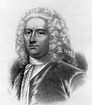
The Infamous Sir John Yeamans

The story of Sir John Yeamans, perhaps my 8th Great Grandfather, is that of legend. It is a fascinating story with several different versions. The one I am relating today is from the Library of Congress. Some of the other versions are quite different than this one. For now, this one will do. A movie could be made about this family character.


Family Group Sheet for Sir John Yeamans

Husband:                  Sir John Yeamans
Marriage:  Bet. 2 AD–11 Apr 1661 in St John, Barbados
Birth:  28 Feb 1611 in St. Mary, Redcliffe, Bristol, England

Death:  Aug 1674 in Barbados

Father:  John Yeamans

Mother:  Blanche Germain
Wife:                         Margaret Foster
Birth:  1613 in West Nimba, British Guinea, West Africa (now Liberia)
Death:  09 Jun 1720 in Charleston, Berkeley, South Carolina, United

States
Father:  John Foster

Mother:  Margaret Gibbes
Children:
1
Name:
Robert Yeamans
M
Birth:
1664 in St. James, Holetown, Barbados

Death:
Jul 1728

   Marriage:
, 1708

Spouse:
Elizabeth Mellows


2
Name:
George Yeamans
M
Birth:
1667 in Barbados


3
Name:
Willoughby Yeamans
F
Birth:
1669

Spouse:
Mr. Smith


4
Name:
Edward Yeamans
M
Birth:
1670 in Barbados


5
Name:
Anne Yeamans
F
Birth:
1671


In the early 1600s John Yeamans, Sir John's father and husband of Blanche Germain, owned Bristol's largest brewery. It was much later sold to the Saunders family, who ran it for a hundred years. It eventually became the Georges' and then the Courage Brewery. Yeamans had 13 children, John was the eldest (born in 1611) and Robert was born in 1616. Sir John Yeamans (as he later became) was one of the early settlers to prosper on the Caribbean island of Barbados. He owned a sugar plantation in Barbados. Yeamans' brother Robert was the Sheriff, Mayor (in 1669) and Chief Magistrate of Bristol, as well as a ship owner and a merchant, who had an early involvement in the Caribbean trade. Redland Court was owned by Sir Robert Yeamans in the 1680s. He died childless. Sir John's grandson, Colonel Robert Yeamans of Barbados, eventually inherited the property.

Library of Congress. Sir John Yeamans, Proprietary governor of Carolina and landgrave, was born in Bristol, England, where he was baptized at St. Mary Redcliffe on 28 Feb. 1611, the son of John, a Bristol brewer, and Blanche Germain Yeamans. He married a Miss Limp, who probably was the mother of his five sons, William, Robert, George, Edward, and one whose name is unknown, and three daughters, Frances, Willoughby, and Anne. He migrated to Barbados by 1638 and formed a partnership for land acquisition with Benjamin Berringer by 1641. In 1643 Yeamans and Berringer were living on the same plantation in St. Peter Parish, but after 1648 the partnership was dissolved.

Yeamans accumulated wealth as a successful planter and gained political prominence in the colony's assembly, on the council, and as a judge in the courts of common pleas. He acquired the confidence of John Colleton, a former royalist officer turned planter and politician. With the restoration of Charles II, Colleton successfully developed the concept, which appears to have been his idea initially, for the establishment of the Proprietary colony of Carolina. As the principal spokesman for the eight Lords Proprietors of Carolina, Colleton took the lead in trying to attract settlers to that colony.
Prior to his intense involvement in the settlement of Carolina, Yeamans married, on 11 Apr. 1661 Margaret Foster, the daughter of the Reverend John Foster and the widow of Yeamans former business partner, Lieutenant Colonel Benjamin Berringer. The Berringer's were the parents of Mary, Simon, John, and Margaret, who was born after the death of her father. Evidence has been uncovered that the last years of the Berringer marriage were unhappy, that Margaret had transferred her affection to John Yeamans, and that the Berringer's were virtually separated. Berringer died in January 1661 after a prolonged and undetermined illness. Suspicion was raised at the time, admittedly by Yeamans political enemies, that Yeamans and Margaret Berringer had conspired to murder her husband. Yeamans was cleared of these accusations by the council of Barbados, and the Berringer estate passed to Margaret Yeamans and her children. For a time the Yeamans lived on Nicholas Plantation (now St. Nicholas Abbey),(Pictured Above), built by Benjamin Berringer after 1656 and considered one of the three great Jacobean houses surviving in the Western Hemisphere.

The attention of the first prospective Carolina settlers focused on the Lower Cape Fear region, which the Proprietors named the County of Clarendon. Here a colony sponsored by the Corporation of Barbadian Adventurers from Barbados and elsewhere established itself in 1664. The Lords Proprietors, however, soon shifted their interest to a more southerly site near Port Royal. Taking advantage of this interest, another group of Barbadians, led by Yeamans, Sir Thomas Modyford, and Peter Colleton, negotiated through Yeamans son Major William Yeamans a Proprietary endorsement for a colony at Port Royal. As a mark of their favor and to add to Yeamans prestige, the Proprietors prevailed on King Charles to confer upon him the honor of knight baronet on 12 Jan. 1665. On the preceding day the Proprietors had appointed him "Governor of our County of Clarendon near Cape Faire and of all that tract of ground which lies southerly as far as the river St. Mathias."

'


In October 1665 Yeamans sailed from Barbados for the Cape Fear with three ships planning to explore southward from there to Port Royal, where he hoped to found a colony. As Yeamans fleet attempted to enter the Cape Fear River, his largest vessel ran aground and sank. Though most of the passengers were saved, his supplies were lost, including the cannon with which he intended to fortify the Port Royal settlement. Shortly after this Yeamans sent another of his vessels to Virginia to obtain food, clothing, and other supplies for the Clarendon settlers, only to have it wreck on the return voyage.

 Yeamans remained on the Cape Fear from early November until shortly after Christmas. Here the governor made plans for Robert Sandford, secretary of the colony, to undertake an exploratory voyage to the south, which was later successfully carried out. Having presided over a meeting of the General Assembly of Clarendon, the governor boarded his one remaining vessel and sailed for Barbados never again to return. For another year and a half the Clarendon settlement hung on, but by the close of the summer of 1667 the last of its settlers departed, and Clarendon County ceased to exist. Its governor meanwhile was embroiled in the uncertain and often tempestuous politics of Barbados and seems to have made no effort to save his colony.


Under the vigorous leadership of Lord Ashley, soon to be created Earl of Shaftesbury, the Proprietors in 1669 renewed their efforts to settle Carolina and dispatched a fleet of three ships with colonists aboard bound for the Port Royal area. With the fleet went a blank commission as governor and commander-in-chief addressed to Sir John Yeamans, at Barbados, who was instructed to fill in the document with his own name or that of another of his choice. Yeamans took command of the expedition, hired the sloop Three Brothers to replace a vessel that had sunk off Barbados, and sailed for Carolina. A great storm scattered the fleet, and the two surviving ships sought safety in Bermuda. Here Yeamans decided, for reasons that are unclear, to withdraw from the expedition and to return to Barbados. He then appointed William Sayle, a septuagenarian and a former governor of Bermuda who had had some earlier connection with Carolina, to take his place as governor.


The expedition then proceeded to Carolina where it established a colony not at Port Royal, but at Albemarle Point on the Ashley River. This colony became the nucleus of South Carolina. Yeamans finally reached the colony in the summer of 1671 with his wife, some of his children, and about fifty immigrants from Barbados in his party. The Proprietors on 5 Apr. 1671 had bestowed upon him the title of landgrave. This was the highest rank in the colony's nobility created by the Proprietors under their new framework of government known as the Fundamental Constitutions. Yeamans expected to be immediately acclaimed as governor of the colony, for under the provisions of the Fundamental Constitutions when a Proprietor was not present in Carolina, the highest ranking member of the native nobility would become governor. Joseph West, who had been named governor following the death of William Sayle, refused to give up his office until he received orders from the Proprietors.


Meanwhile, Yeamans established a plantation on Wappoo Creek and reportedly introduced slavery to the colony. Despite repeated efforts to gain the governorship, he was stymied until the Proprietors, acting in accordance with the provisions of the Fundamental Constitutions, ordered that the landgrave be given preference to a commoner and sent him a commission.


On 26 Mar. 1672 the Council proclaimed Sir John governor. In an effort to provide needed food supplies for the colony in 1672 and 1673, Yeamans made liberal use of the Proprietors' credit without their approval. It was also charged in the colony that he had attempted to make huge profits from the food shortages and that his actions had helped bring on these shortages. Displeased at last with Sir John after years of the closest association, the Proprietors on 25 Apr. 1674 revoked his commission as governor and proceeded to appoint Joseph West as his successor. Before this news reached the colony, however, Governor Yeamans died, and on 13 Aug. 1674 Joseph West was named to succeed him.


Lady Margaret remained in South Carolina for several years securing additional land grants that she left to her daughter Margaret, who later became the wife of Colonel James Moore, the founder of a second and permanent settlement on the Cape Fear. Lady Margaret eventually married Captain William Walley and returned to Barbados, where she died.


Sir John Yeamans continues to be an enigmatic figure. He clearly deserves credit as a founder of the two Charles Townes-first on the Cape Fear and then in southern Carolina-but his terms as governor of each of the colonies were more controversial. Circumstances conspired to overwhelm the fledgling Cape Fear colony, but Yeamans initially tried to save the settlement. His interest, however, lay farther south. His tenure in the southern colony was marred by dissension, although again he attempted, even beyond Proprietary limits, to meet the colony's most pressing problems. The accusation that he alienated his friend's wife and then murdered him cannot be absolutely proven, but the circumstantial possibility seriously compromises his character. Seen in the best light, Yeamans may be viewed as an energetic and restless adventurer who was actively involved in the West Indian colonization of the mainland, playing a significant role in the founding of the Carolinas.

Sir John Yeamans


St. Nicholas Abbey